


A diagnosis of hearing loss in a child is not the end of communication—it marks the beginning of a new journey that requires awareness, empathy, and the development of specialized communication skills. Children with hearing loss need a supportive and interaction-rich environment to foster cognitive development, language acquisition, and emotional intelligence.
The way parents, educators, and caregivers interact with these children plays a crucial role in shaping their self-confidence, social integration, and long-term success. In this article, Hayat Medisa Teb explores evidence-based and practical strategies for effective communication with children who have hearing impairment.
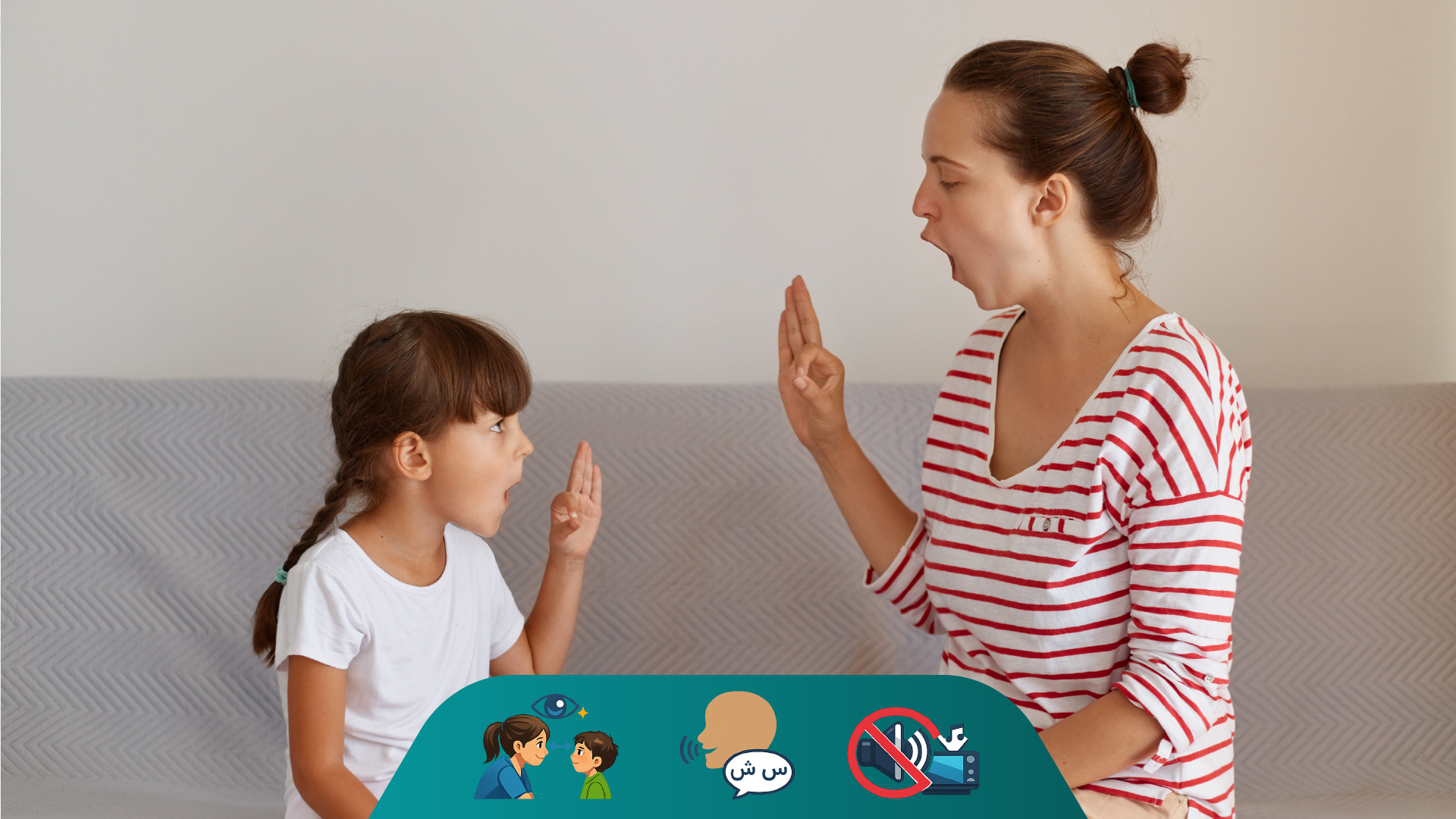
1. The Foundation of Communication: Gaining Attention and Establishing Eye Contact
The first and most important rule when communicating with a child with hearing loss is ensuring that they are attentive and focused. Unlike hearing children, who may respond to speech from another room or while engaged in play, children with hearing loss often rely heavily on visual cues to process spoken language.
Gain Visual and Tactile Attention
Before speaking, gently attract the child’s attention by waving your hand, making eye contact, or lightly touching their shoulder.
Position Yourself at Eye Level
When communicating, sit down or kneel so that your face is aligned with the child’s eye level. This not only creates a sense of connection and trust but also allows the child to benefit from lip-reading and facial expressions.
Ensure Proper Lighting
Always position yourself facing the light source so that your face is clearly visible. Shadows can obscure facial cues and significantly hinder speech perception and lip-reading.
2. Modifying Communication Style: Speak Clearly, Not Loudly
A common misconception is that speaking louder helps a child with hearing loss understand better. In reality, shouting often distorts natural speech patterns and facial movements, making lip-reading more difficult and sometimes intimidating.
Speak Clearly and at a Moderate Pace
Use a natural tone of voice, speak slightly slower than usual, and articulate words clearly. Avoid exaggerating lip movements or over-enunciating speech, as this can reduce comprehension rather than improve it.
Use Concise and Meaningful Sentences
Keep sentences simple and well-structured. If the child does not understand a message, try rephrasing it using different words rather than repeating the same sentence multiple times.
Support Speech with Natural Gestures
Facial expressions, body language, and natural hand gestures can provide valuable contextual information and enhance understanding.
3. Managing the Listening Environment: Maximizing Auditory Access
Even the most advanced hearing aids may face challenges in highly noisy or acoustically complex environments. Optimizing the listening environment can significantly improve speech understanding.
Reduce Background Noise
During important conversations, lower or turn off competing sound sources such as televisions, radios, or music.
Choose Appropriate Seating Arrangements
In busy settings such as restaurants, family gatherings, or classrooms, position the child close to the primary speaker and away from major noise sources. Ideally, loudspeakers and other sources of background noise should be located behind the child.
4. The Role of Technology in Everyday Communication
Auditory training and rehabilitation achieve the best outcomes when combined with modern hearing technology. Advanced hearing systems that effectively reduce background noise and enhance speech signals can significantly decrease cognitive listening effort and auditory fatigue.
Unitron’s advanced hearing aids, particularly those powered by the latest Vivante and Smile platforms, utilize artificial intelligence and sophisticated directional microphone technology to help children access speech more clearly, even in challenging environments such as classrooms and daycare centers. In addition, wireless accessories and remote microphone systems can transmit a teacher’s or caregiver’s voice directly to the child’s hearing aids, minimizing the impact of environmental noise and improving communication efficiency.
5. Emotional Support and Building Self-Confidence
Effective communication extends beyond the transmission of words—it also involves conveying respect, encouragement, and a sense of belonging.
Be Patient
Allow the child sufficient time to process information and formulate responses. Avoid interrupting, correcting prematurely, or completing their sentences.
Encourage Active Participation
Include children with hearing loss in family discussions, classroom activities, and social interactions. Ask for their opinions and demonstrate that their thoughts and contributions are valued.
Avoid Excessive Sympathy
Overprotective or overly sympathetic behavior can unintentionally undermine a child’s independence and self-esteem. Treat children with hearing loss as you would any other child while thoughtfully accommodating their communication needs.


