



Choosing the correct hearing aid battery is one of the most common questions patients ask during their audiology appointments. Unlike conventional batteries, hearing aid batteries use advanced zinc-air technology, a unique chemical system that provides high energy density in an extremely compact size while maintaining the stable voltage required for sophisticated digital sound processing.
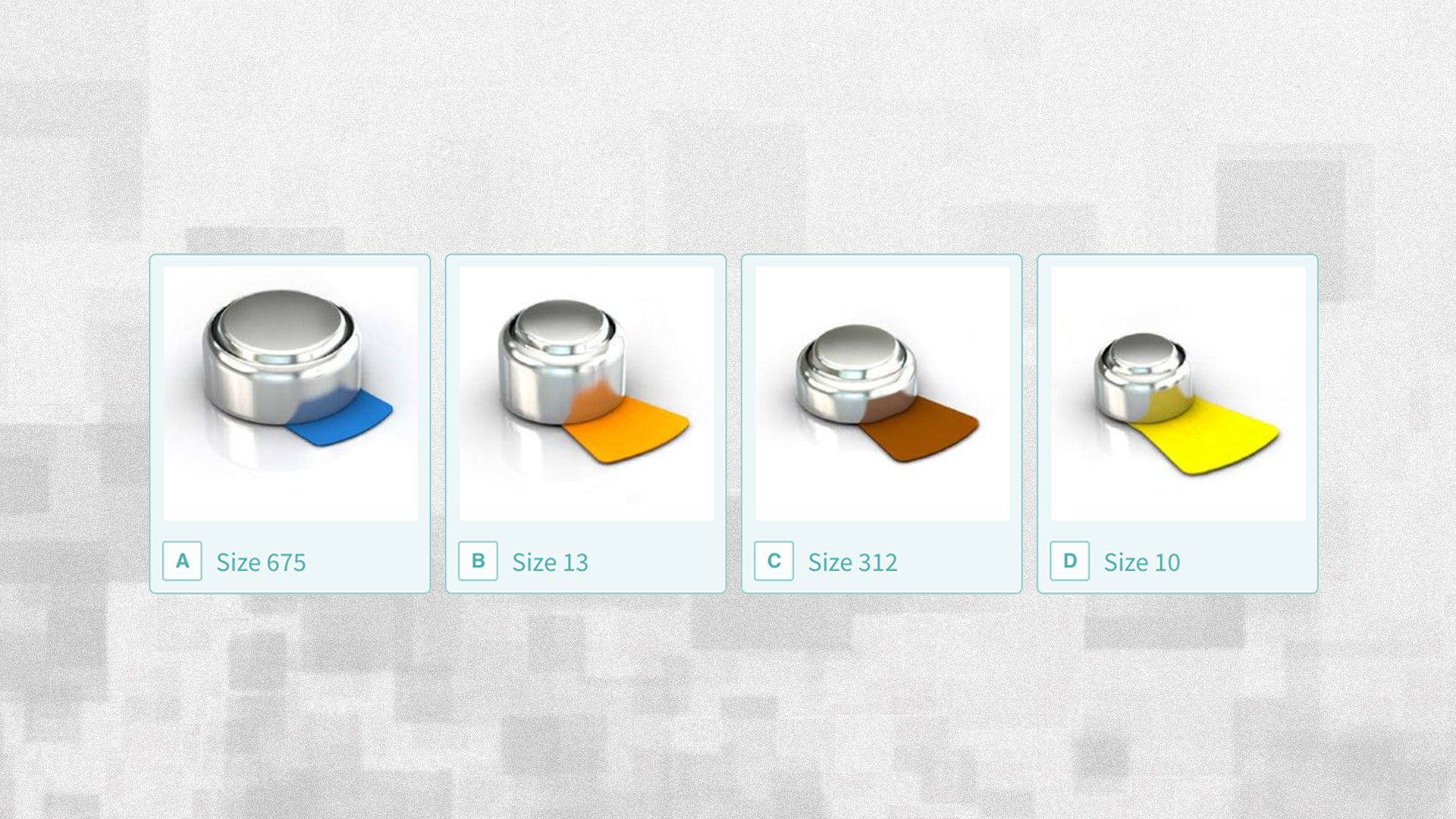
To help users quickly identify the correct battery, hearing aid manufacturers follow an internationally standardized color-coding system. This guide explains the different battery sizes, their color codes, clinical applications, expected lifespan, and the factors that influence battery performance.
Quick Reference Guide: Hearing Aid Battery Sizes
| Battery Size | Standard Color Code | Compatible Hearing Aid Styles | Average Battery Life |
|---|---|---|---|
| Size 10 | Yellow | Invisible-in-the-Canal (IIC), Completely-in-the-Canal (CIC) | 3–7 days |
| Size 312 | Brown | Receiver-in-Canal (RIC/RITE), In-the-Canal (ITC) | 3–10 days |
| Size 13 | Orange | Behind-the-Ear (BTE), In-the-Ear (ITE) | 6–14 days |
| Size 675 | Blue | Super Power (SP/UP) BTE hearing aids and cochlear implant processors | 9–20 days |
Understanding the Different Hearing Aid Battery Sizes
Size 10 (Yellow)
Size 10 is the smallest standard hearing aid battery available, measuring 5.8 mm in diameter and 3.6 mm in height.
Clinical applications
Because of its compact size, it is designed exclusively for:
- Invisible-in-the-Canal (IIC) hearing aids
- Completely-in-the-Canal (CIC) hearing aids
Battery life
Due to its limited capacity, Size 10 batteries have the shortest lifespan, typically lasting 3 to 7 days, depending on hearing aid settings and daily usage.
Size 312 (Brown)
Size 312 is the most widely used hearing aid battery in modern audiology. It shares the same 7.9 mm diameter as Size 13 but is shorter, measuring 3.6 mm in height.
Clinical applications
This battery powers many of today’s most popular hearing aids, including:
- Receiver-in-Canal (RIC/RITE) hearing aids
- In-the-Canal (ITC) hearing aids
Battery life
Depending on Bluetooth usage and audio streaming, Size 312 batteries typically last 3 to 10 days.
Size 13 (Orange)
Size 13 offers an excellent balance between battery capacity and physical size.
Clinical applications
It is commonly used in:
- Standard Behind-the-Ear (BTE) hearing aids
- Larger custom In-the-Ear (ITE) hearing aids
These devices generally require greater amplification and higher output power than smaller hearing aids.
Battery life
Thanks to its larger chemical capacity, Size 13 batteries usually provide 6 to 14 days of operation.
Size 675 (Blue)
Size 675 is the largest and most powerful zinc-air hearing aid battery.
With a diameter of 11.6 mm and a height of 5.4 mm, it is specifically designed for high-power hearing devices.
Clinical applications
Size 675 batteries are commonly used in:
- Super Power (SP) hearing aids
- Ultra Power (UP) hearing aids
- Cochlear implant sound processors
These devices are intended for individuals with severe to profound hearing loss and require substantially higher energy output.
Battery life
Because of their high capacity, Size 675 batteries generally last 9 to 20 days, depending on usage patterns.
What Affects Hearing Aid Battery Life?
The battery life estimates above are averages. Actual performance depends on several factors, including the user’s lifestyle, hearing aid settings, and listening environment.
Bluetooth Streaming and Digital Processing
Wireless connectivity is one of the largest contributors to battery consumption.
Features such as:
- Bluetooth audio streaming
- Phone calls
- Television streaming
- Advanced noise reduction algorithms
- Artificial intelligence-based sound processing
can increase battery usage by as much as 30% compared with standard operation.
Degree of Hearing Loss
The greater the hearing loss, the more amplification the hearing aid must provide.
Higher amplification requires greater electrical output, causing the battery to discharge more quickly.
Environmental Conditions
Temperature and humidity also influence zinc-air battery performance.
- Extremely dry environments can accelerate moisture loss inside the battery.
- Excessively humid environments may affect the battery’s chemical reaction and reduce efficiency.
Both conditions may shorten battery lifespan.
Why High-Quality Hearing Aid Batteries Matter
Modern digital hearing aids rely on a highly stable voltage supply for accurate signal processing.
Using low-quality or non-standard batteries may result in:
- Unexpected hearing aid shutdowns or repeated restarts
- Distorted or unstable sound quality
- Reduced Bluetooth performance
- Potential damage to sensitive digital processing circuits over time
For optimal performance, hearing care professionals recommend using high-quality zinc-air batteries from reputable manufacturers and storing them in a cool, dry environment until use.


